Cerebral Palsy Awareness Month is a time to reflect on access, inclusion, and the many ways people communicate — at school, at home, and in everyday life.
Harper is a 9‑year‑old AAC communicator who lives with cerebral palsy. Like many people, Harper’s communication journey is shaped by her individual strengths, preferences, and the environments around her. Access to AAC plays an important role in supporting her participation, connection, and sense of belonging at school.
Below, NSW‑based speech pathologist and Liberator consultant Jo Beech shares her perspective on Harper’s AAC journey. Through Harper’s story, Jo reflects on what becomes possible when communication is supported consistently, peers are included, and AAC is welcomed across environments.
Note: Story is shared with Harper’s consent (along with her family’s consent.)
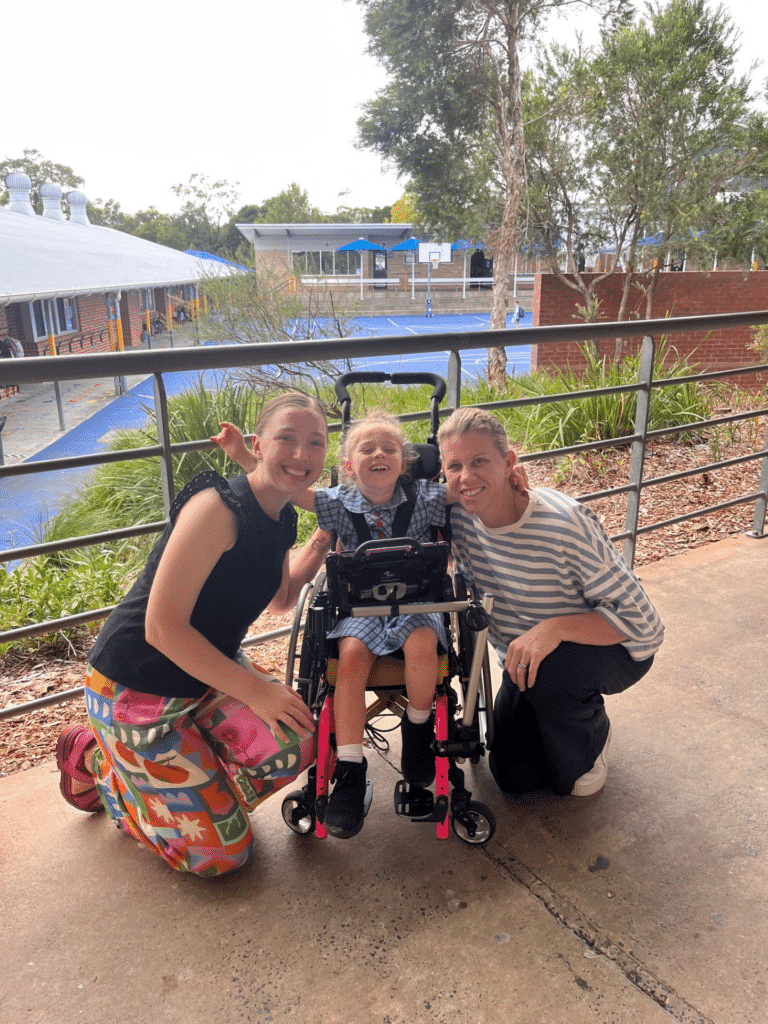
I met Harper at the end of year 2, back in 2023. She was in a support unit in a mainstream school and needed support to find a robust communication system that met her needs and preferences. Her mum shared that she would like Harper to transition into a mainstream school setting in the future and was exploring devices with features that would support Harper’s access and learning.
Harper was (and still is) an incredibly social child. She just needed a system that would give her her own unique voice and a way to fully access the curriculum.
Harper already had an eye gaze device at home that she’d used since she was little, but she now much preferred to use her hands to access the screen directly. We trialed a stylus, different keyguards and touchguides, and landed on an Accent 1000 with Unity® 84 sequenced and a touchguide.
Our progress at first was slow, but steady. We started by engaging in shared book reading during weekly sessions and coached Harper’s teachers and family members to model single words linked to activities she loved. Over time, Harper progressed from single words such as ‘read’, ‘turn’, ‘like’, ‘eat’, and ‘help’, to combining two and three words together like ‘go dad’, ‘eat cookie yum’, and ‘stop it out!’
As Harper’s access became more reliable, so did her confidence — not just in sessions, but in everyday school moments. We’ve worked hard to ensure her device is charged and accessible across environments, and she now enjoys having her device mounted to her wheelchair in the school playground.
This term, Harper and her full‑time teacher’s aide set a goal to start an AAC lunchtime group for Harper and her friends. The aim was to support Harper to feel confident using her AAC in the playground, while also helping her peers become supportive communication partners.
The group, ‘Harper Cooks’ (named by Harper), launched in Week 6 of Term 1. We set up Harper’s favourite activities — including pretend food play, board games, and chasing games — and used AAC throughout. Six of Harper’s friends were introduced to low‑tech communication boards and learned how to model single words while chatting together.
The group also focuses on skills such as waiting for Harper to finish typing before responding, asking open‑ended questions, and responding to all of Harper’s communication attempts.
Harper plays an active leadership role in the group, including writing personal invitations to her friends using her device, choosing activities with her teacher’s aide, showing her friends how she communicates using AAC, and reflecting on what worked well after each session.
We hope this group continues to spark conversations across the school community about the different ways people communicate, and helps build understanding, patience, and inclusion. For Harper, it’s another step toward being heard, included, and recognised as the capable, social communicator she is.
As Cerebral Palsy Awareness Month comes to a close, Harper’s story reminds us that awareness is about more than understanding a diagnosis — it’s about recognising people, strengths, and possibilities.
For Harper, access to AAC has opened up more than words. It has supported confidence, friendships, leadership, and a sense of belonging at school.
We hope stories like Harper’s encourage families, educators, and communities to keep making space for different ways of communicating. We believe in what AAC communicators can do when they’re supported, included, and heard!
Whether you want to discover our devices, find a training workshop, or book a free 1:1 consult, we’re here to help!
Call 9124 9945 or email support@liberator.net.au to connect with our team.